
Seven Home Additions for Smart Homeowners
- Bump-out – often a cantilevered design, this type of addition can be as small as adding a few feet to gain more square footage in a room, often the kitchen or bathroom. This small addition can give you more workable space while featuring a minimal exterior change and is often way more affordable than undergoing a full-fledge addition. It’s most attractive to homeowners that are just looking for a little more room or for specific room solutions, such as a reading nook or dining space in the kitchen, without the need to have a foundation poured and the associated expense.
-

Client Garage Conversion – Door Removed and Entrance and Windows Framed.
Garage Conversion – this entails taking a functioning garage and turning it into additional living space. This can often be a desirable choice as this space is already sharing walls with the existing house and you can visually see what recapturing that area would accomplish. Depending on how you want to use the space, it may be less expensive to convert your garage versus adding on new space, because a foundation and walls already exist and plumbing and electrical components are readily available. We always recommend a replacement for car storage in the form of a new garage or at least a carport, as removing a garage can affect home value.
- Over-Garage Addition – just as it sounds, this entails adding new living space above a garage. It’s ideal for homes with a limited lot size, where changing the footprint of the home is an issue. This space can be tied into the house

Over-Garage Apartment Addition For Recent College Grad
as a primary suite, office space, or serve as a rental unit with a private entrance. Garages are typically not well-insulated, so special attention should be paid to the heating/cooling systems in a garage addition.
- Basement Remodel – this addition is gained from unfinished space that exists within your basement but is not currently usable. Finishing this space can be a huge boon to your home’s value by adding functional living space in the form of a living room, playroom, extra bedrooms, a home gym or more. One challenge to a basement remodel is that egress to the outside is required, as is appropriate ceiling height. The space also must accommodate HVAC, plumbing, and electrical systems.
-

Conventional Addition to a Redmond home.
Conventional Addition – this type of addition is what most of us think of when considering adding space to our home. In most cases, it’s selected by those who intend to remain in their home long term and want to add significant square footage and have sufficient lot space to support this. This type of addition requires a new foundation to be poured for the added square footage along with a good design to allow the new and old to blend seamlessly.
- Second Story Addition – adds onto a home so that a one-story becomes a two-story home. Like the over-garage addition, often this is chosen by homeowners with a limited lot size but want more space. Ideal for growing families, you can double your square footage with a second story addition, especially if you like your home, schools, and neighborhood. A significant investment is required as structural support will be a key component of this type of home improvement, but the commitment can vary depending on whether you want just one bedroom/extra space or a full floor of new rooms.
-
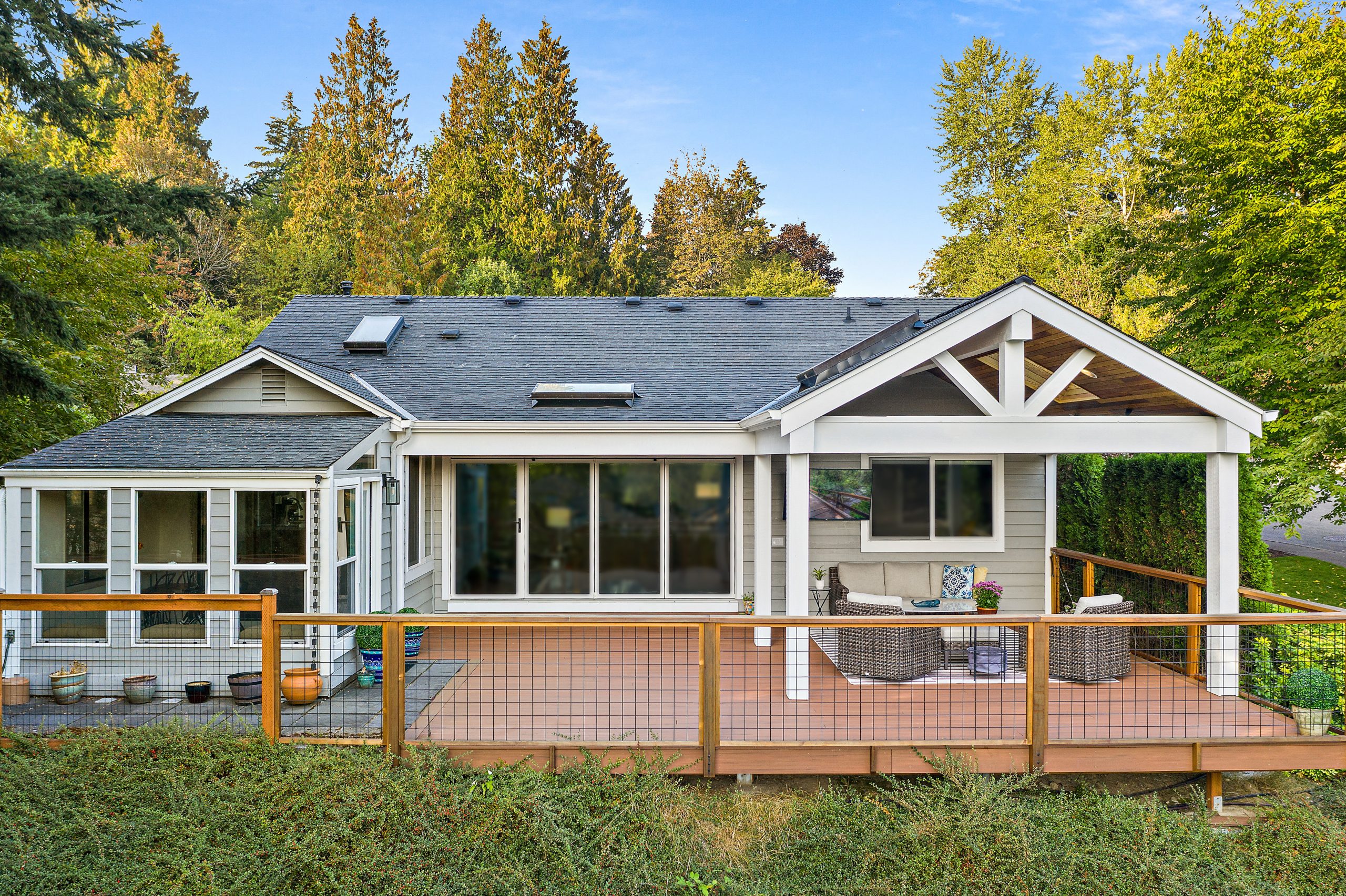
Outdoor Living Space Addition in Kirkland
Outdoor Living Space Addition – for those nature lovers that want fresh air year-round, but with all the creature comforts, an outdoor living space addition is for you. These home additions usually include a fireplace, built-in kitchen, heaters and comfortable furniture, all under a covering. Outdoor living space additions are becoming more popular in our area since inclement weather is often an issue, but we love being outside!