
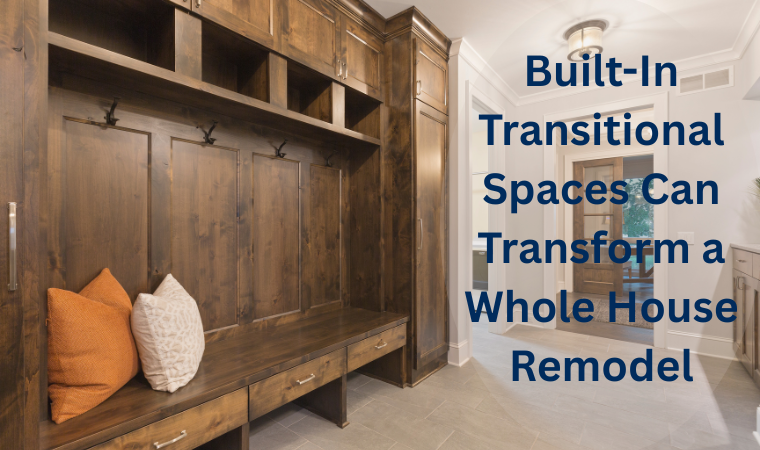
Built-In Transitional Spaces Can Transform a Whole House Remodel
When homeowners think about a whole house remodel, they often picture dramatic before-and-after moments in the kitchen, living room, or primary suite. However, one of the most impactful design moves you can make is to create built-in transitional spaces that connect how the home looks with how it actually works. Design experts continue to emphasize comfort, functionality, wellness, and flexible everyday living—making highly usable transition zones feel not only practical, but necessary.
What Is a Built-In Transitional Space?
A built-in transitional space is a hardworking zone designed at the edges of daily movement – where you enter from the garage, pass from the kitchen to the backyard, unload groceries, stash backpacks, or change out of wet shoes. It can take the form of a mudroom with closed storage, a kitchen-adjacent pantry wall with appliance garages, a laundry entry with a bench and sink, or a widened threshold that blends indoor and outdoor living. What makes it valuable in a whole house remodel is that it improves the flow of the entire home—not just one room.
Why It Works So Well in a Whole House Remodel
Whole house remodels offer a rare opportunity to rethink the whole way you want to use your home instead of simply refreshing finishes. Rather than reimagining storage into unused corners, you can intentionally reconceptualize the flow to your home – placing cabinetry, seating, hooks, drawers, and durable surfaces right where life happens. A well thought out transitional space means fewer visual interruptions, less daily clutter, and a home that feels calmer because it is easier to keep organized.
Three Great Projects that Use This Feature
- Create a multipurpose mudroom. A well-designed mudroom is the control center for a home, not just a pass-through or place that holds coats. The best mudrooms combine closed cabinetry, open hooks, a seating spot, durable flooring, and bins for everyday gear. For mudrooms we recommend durable finishes, seating, coat storage, and catchall organization for the small items that otherwise spread across the house and cause chaos. In custom home remodels, like we provide, that kind of space can become the home’s control center offering specific storage options and ultimate functionality offering incredible day to day performance of your home.
- Add a kitchen-adjacent drop zone. Easily one of the smartest whole house remodel decisions for clients is by extending kitchen design logic into your entry sequence. Imagine no clutter after everyone comes home, instead, matching cabinetry conceals shoes, bags, pet supplies, small appliances, and overflow pantry items so the kitchen stays visually clean and yet everything has a dedicated space. Kitchen-mudroom combinations are becoming more popular because they streamline the busiest route in the home: from exterior door to storage, to prep space.
- Improve your home’s indoor-outdoor threshold. In many home remodels, the most luxurious feature is not an oversized room but a seamless connection between inside and out. That could mean large doors to a patio, an outdoor kitchen connection, or a covered transition area with storage and lighting. Even in our rainy climate, clients are seeking a more personal, flexible, and wellness-oriented home design, increasing their home’s functionality in all seasons.
Design Details That Make the Feature Feel Intentional
The difference between an improvised drop zone and a polished design feature is in the details. Repeating cabinet styles from adjacent rooms creates continuity offering an enclosed and intentional feel with wood tones, textured finishes, and durable tile. You’re looking to create a highly personal space that offers the ultimate in practicality, so don’t forget layered lighting, mirrors, and thoughtful hardware.
If this sounds like something you need in your home, consider the following questions:
- Where does clutter naturally collect now?
- Which entry does your household use most often?
- Do you need open storage, closed storage, or a combination?
- Should the space include seating, a sink, laundry access, or pet cleanup features?
- Can the finishes match nearby cabinetry so the feature feels integrated?
- What seasonal items need to live here year-round?
With over 50 years of home remodeling experience, our team believes a well-thought out transitional space can be transformative. Not only will they support your daily routine and reduce friction between family members and spaces, but they are also the kind of design feature that makes a remodel look better because it allows you to live better.